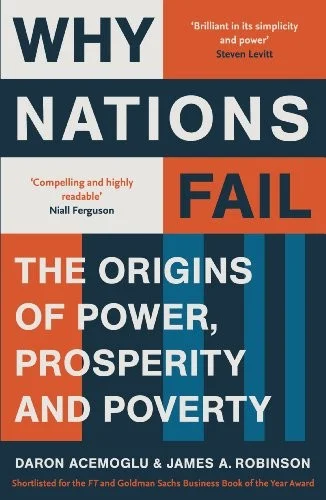
In *Why Nations Fail*, acclaimed economists Daron Acemoglu and James A. Robinson challenge conventional wisdom by arguing that a nation's destiny is not predetermined by geography, culture, or history alone. Instead, they present a powerful analysis of how political and economic institutions are the fundamental drivers determining whether societies thrive or struggle. The authors trace global development through historical 'critical junctures,' demonstrating that specific institutional structures—some inclusive, others extractive—have played outsized roles in shaping long-term trajectories of power and prosperity. The book meticulously unravels the intricate web connecting political power to economic outcomes. Acemoglu and Robinson argue that successful nations are those that develop inclusive institutions, which encourage innovation, investment, and broad participation. Conversely, they detail how extractive institutions—those designed primarily to benefit a ruling elite—systematically stifle growth, leading to cycles of poverty and instability. By synthesizing decades of original research, the authors provide a compelling framework for understanding global economic disparity. *Why Nations Fail* is essential reading for anyone seeking to understand the root causes of wealth inequality, offering profound insights into how human-made political systems ultimately determine the fate of nations.